
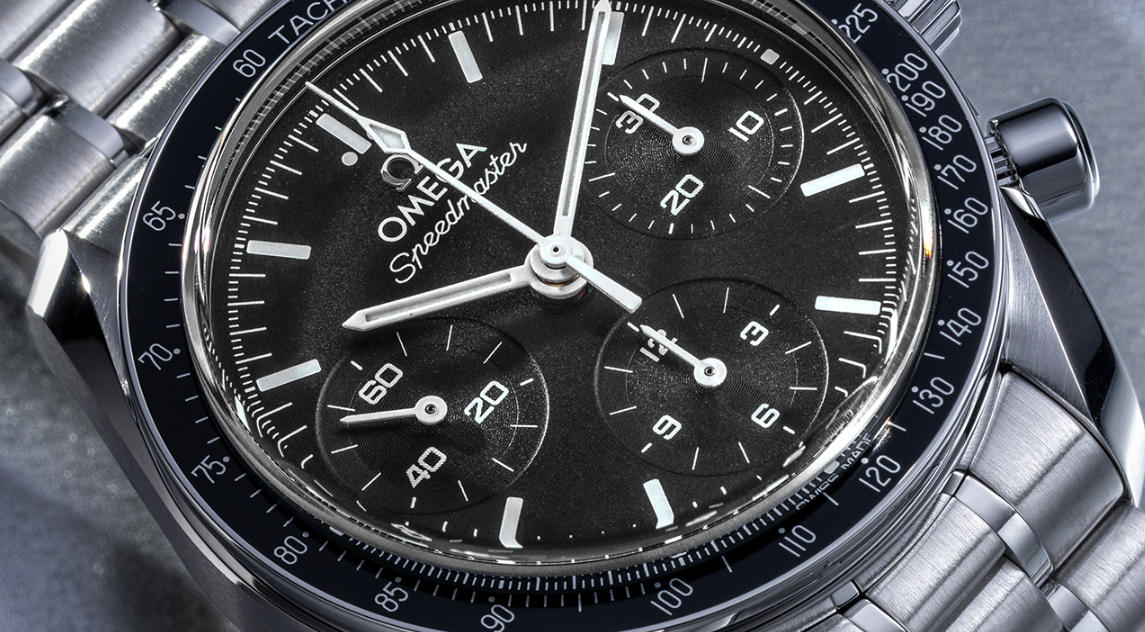
There has never really been one Speedmaster. The Moonwatch may be the model everyone recognises, but Omega has spent decades stretching the name across different sizes, movements, colours and personalities. That variety is partly why the collection has remained interesting for so long.The Speedmaster 38 has always sat a little outside the main conversation. Since arriving in 2017, it offered a smaller case and automatic movement, but details such as its oval subdials gave it a noticeably different character from the traditional Moonwatch. For some people that distinction was exactly the point. For others, it made the 38 feel like a distant relative rather than a compact version of the Speedmaster they actually wanted.That is what makes the latest update interesting. Omega has not simply changed the colours. It has quietly altered the visual language of the watch, bringing the 38mm range much closer to the familiar Speedmaster formula without turning it into a miniature copy of the 42mm Moonwatch.
The round subdials make a bigger difference than expected
The most obvious change is also the one that transforms the watch most convincingly. The old oval registers have gone and conventional round subdials take their place.On paper that sounds minor. On the wrist, or even when looking at photographs, it changes the whole balance of the dial. The watch now reads immediately as a Speedmaster rather than a smaller chronograph carrying the Speedmaster name.Omega has also reduced some of the wording on the dial. That extra breathing room matters on a 38mm watch, where even a few lines of text can make the display feel busier than it would on a 42mm case.For anyone who has always liked the idea of a smaller Speedmaster but not the appearance of the earlier version, this is probably the most important improvement. The result feels like a compact Omega Speedmaster with traditional Moonwatch proportions rather than an entirely separate design exercise.
The Moonwatch influence continues around the bezel
Look beyond the subdials and there are several smaller changes aimed directly at Speedmaster enthusiasts.The revised bezel is broader and cleaner than before, while the familiar Dot Over Ninety returns to the tachymeter scale. It is the sort of tiny historical reference that means very little to somebody buying a chronograph purely for appearance, yet Speedmaster followers tend to notice it immediately.It works because Omega has not covered the watch in obvious vintage details. Instead, the company has borrowed a few established Speedmaster cues and used them to make the 38 feel more connected to the wider family.Readers comparing different Omega designs can also browse the site’s Replica Omega Watches section, where the Speedmaster sits alongside very different collections such as the Seamaster, Aqua Terra and De Ville.
38mm sounds small but the case still has some presence
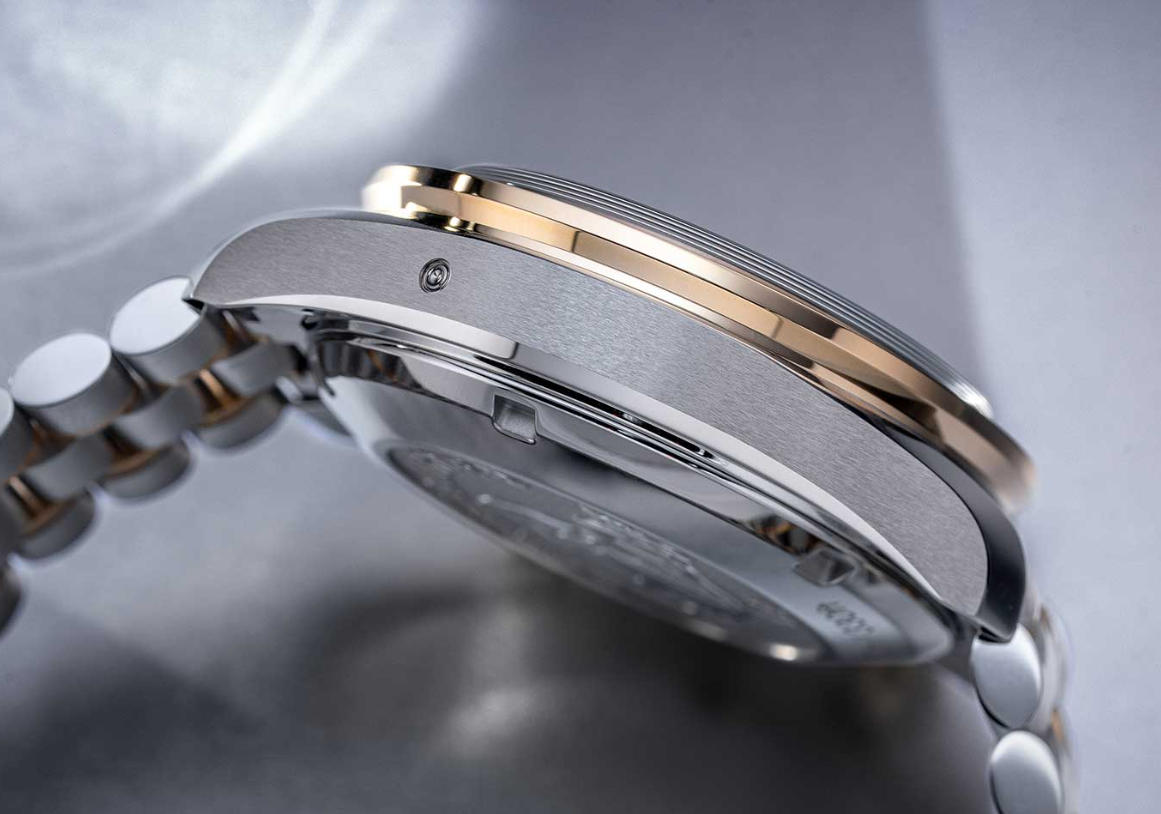
The diameter remains 38mm, which is likely to be one of the main reasons people look at this watch instead of a standard Moonwatch. Yet the number does not tell the entire story.The case is approximately 14.75mm thick. That makes this a compact chronograph rather than an especially slim one. Somebody expecting the proportions of a small vintage hand-wound watch may therefore be surprised by how substantial it still feels.That is not necessarily a weakness. Automatic chronographs tend to carry more depth, and the thickness gives the Speedmaster 38 enough visual presence that it does not disappear on a larger wrist. More importantly, the reduced diameter should make it easier to accommodate for people who find a 42mm Moonwatch slightly too broad.This balance between diameter and depth is worth paying attention to when comparing Omega Speedmaster options for smaller wrists in the UK. Case diameter alone rarely tells you how a chronograph will actually wear.
The new bracelet completes the change
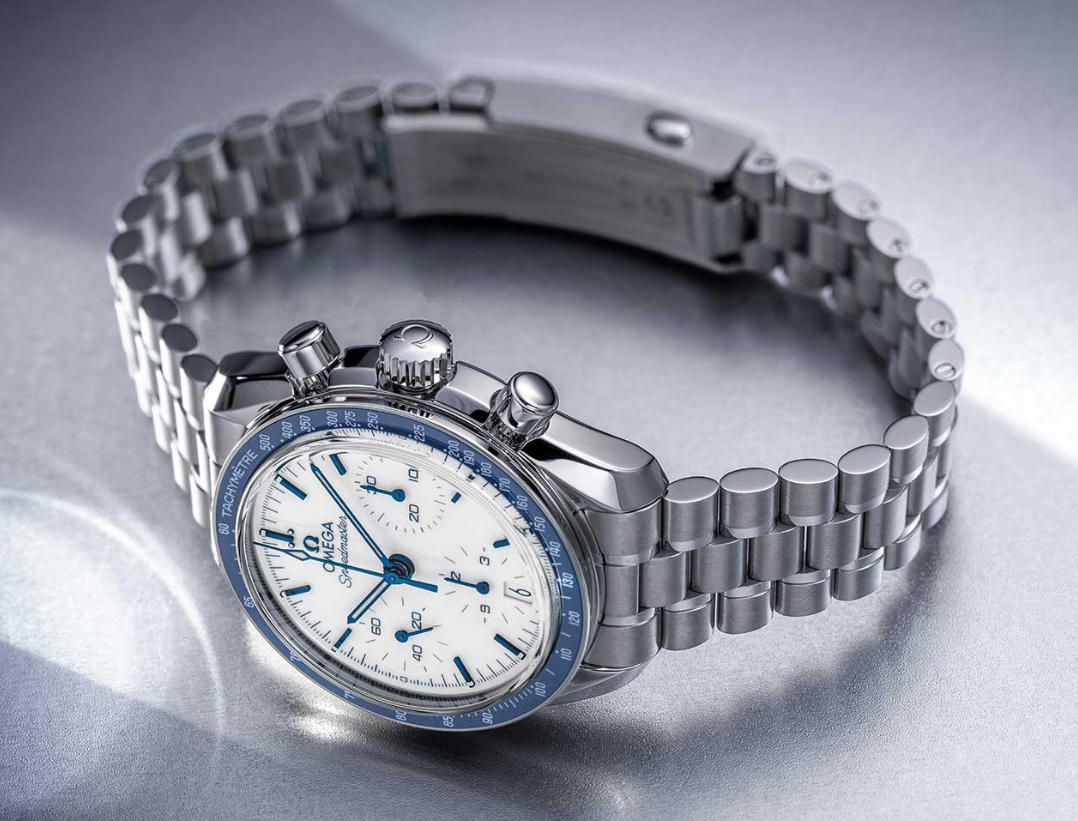
Every version now comes with a five-link bracelet influenced by the modern Moonwatch design. Depending on the reference, the smaller centre links are either polished or brushed.This may be less dramatic than the new dial layout, but visually it is nearly as important. Bracelets frame a watch on the wrist, and the previous Speedmaster 38 never quite gave the same immediate impression as the current Moonwatch.The new arrangement ties the case and dial together much more convincingly. It also makes the steel black-dial model particularly coherent because almost every major visual element now points back toward the classic Speedmaster.
The black dial is the closest thing to a smaller Moonwatch
Seven references make up the updated collection, but the black-dial steel version is the one enthusiasts are likely to discuss most.It pairs a black aluminium bezel with a black varnished dial, white luminous hands and markers and, crucially, no date window. That last detail makes a surprisingly large difference.Six of the seven watches use Omega’s automatic Co-Axial Calibre 3330 and retain a date display at six o’clock. The black model alone receives Calibre 3332 and loses the date.Without that aperture, the symmetry becomes cleaner and the connection with the Moonwatch stronger. For somebody looking specifically for a 38mm Omega Speedmaster with a clean black dial, this is easily the most convincing interpretation of the new range.It is not a Moonwatch reduced by four millimetres, though, and that distinction is important. The movement architecture, automatic winding and case proportions remain different. The appeal comes from sharing the right visual vocabulary rather than pretending to be the same watch.
The white and blue model has more personality
If the black version is the obvious traditional choice, I find the white-dial steel model more interesting in its own way.Here Omega pairs a white lacquered dial with blue hands and markers, along with a blue ceramic bezel carrying a white enamel tachymeter scale. Even the date numerals follow the blue colour scheme.It does not try quite as hard to resemble the classic Moonwatch, and that is precisely why it works. There are hints of other Speedmasters in the combination, including earlier CK2998 interpretations and some of Omega’s white-and-blue limited editions, but the watch still feels contemporary.If I wanted the most traditional 38mm, I would choose black. If I wanted a Speedmaster 38 that still had a recognisable identity of its own, the white and blue version would probably win.
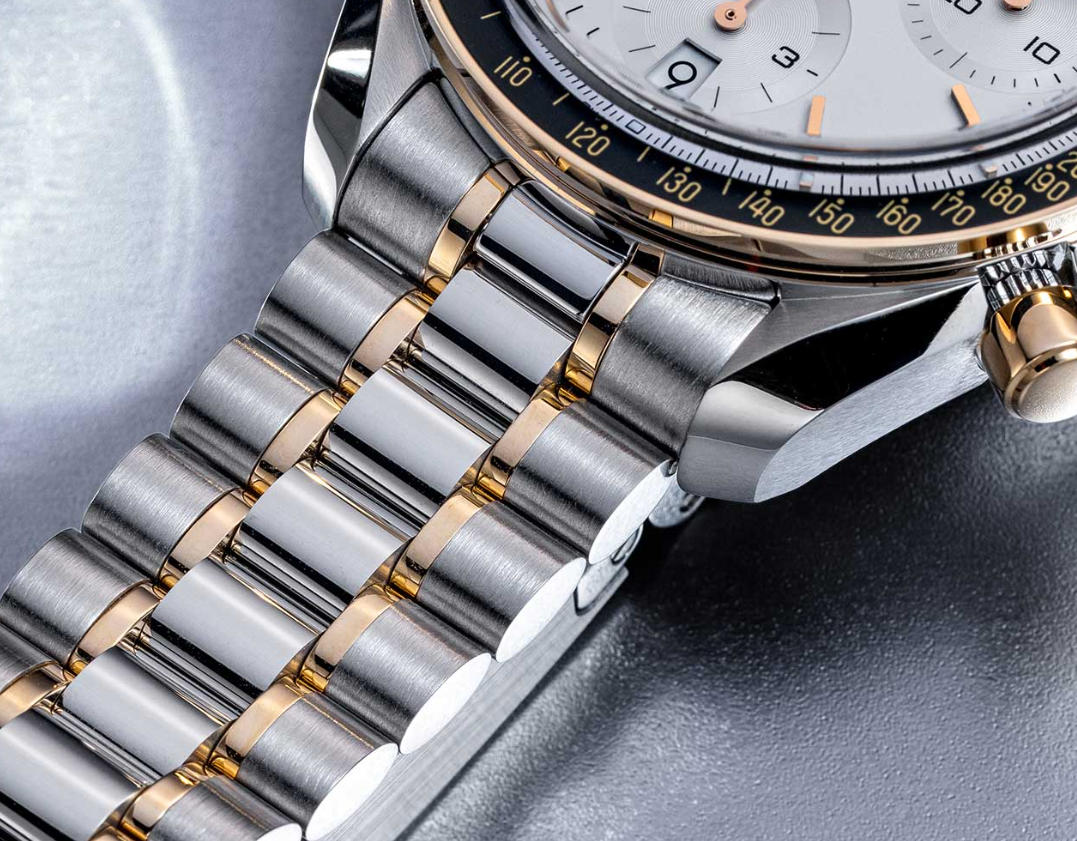
The warmer versions change38 for years.
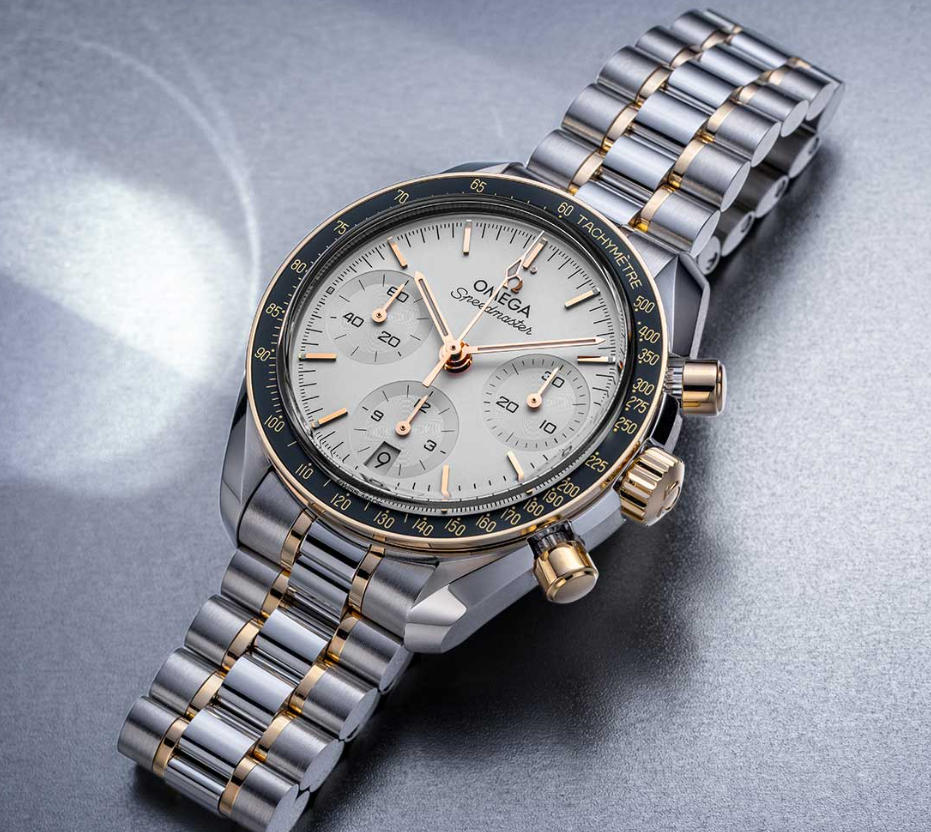
Two diamond-set versions sit at the decorative end of the range, one with an ice-blue dial and another with white mother-of-pearl.This breadth is useful because it confirms that Omega has not turned the entire 38mm collection into a downsized Moonwatch. Instead, the company has made the underlying design more recognisably Speedmaster while allowing the individual references to go in very different directions.
Calibre 3330 and 3332 are capable but not the latest Omega technology
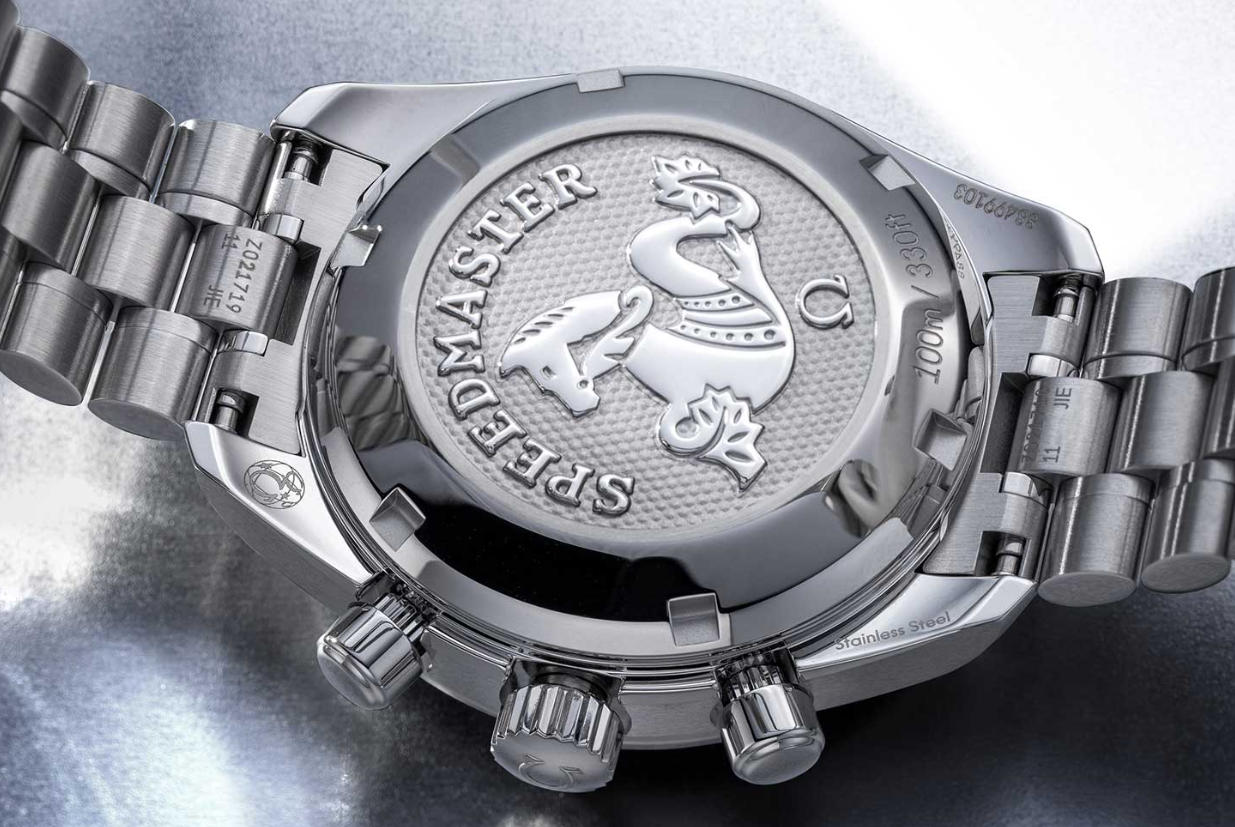
Mechanically, these watches occupy an interesting position.The Calibre 3330 used in the date models and the Calibre 3332 fitted to the no-date black version are both automatic Co-Axial chronograph movements. The Calibre 3330 also offers around 52 hours of power reserve.They are established movements rather than Omega’s newest Master Chronometer architecture. That may disappoint buyers who associate modern Omega with METAS certification and very high magnetic resistance.On the other hand, there is a practical argument for sticking with proven automatic chronograph movements in this collection. They suit the everyday personality of the Speedmaster 38, particularly for somebody who prefers automatic winding over the ritual of manually winding a traditional Moonwatch.That distinction should be considered rather than hidden. Anyone researching modern Omega references, including readers comparing genuine models with the broader replica watches UK market covered by SpankWatches, benefits more from understanding where the designs and movements genuinely differ than from treating every Speedmaster as interchangeable.
So is the new Speedmaster 38 more convincing?
Yes, mainly because Omega has resisted changing too much.The old Speedmaster 38 was not a bad-looking watch, but its oval registers and more decorative styling placed some distance between it and the chronograph most enthusiasts picture when they hear the Speedmaster name.Round registers, the revised tachymeter bezel, Dot Over Ninety and the five-link bracelet have closed that gap. None is revolutionary on its own. Together they give the watch a much stronger identity.The black no-date model is the obvious choice for somebody who has always wanted a smaller alternative to the 42mm Omega Moonwatch. The white-and-blue reference is arguably more distinctive, while the bi-colour and diamond versions show that the 38mm collection is still willing to move beyond the traditional tool-watch formula.The one point worth remembering is thickness. A 38mm diameter does not automatically make this a delicate watch. At 14.75mm, it should still feel like a proper automatic chronograph on the wrist.That may actually be the best thing about the update. Omega has not simply shrunk the Moonwatch. It has finally made the Speedmaster 38 feel like a closer member of the same family while leaving enough differences to justify its existence.