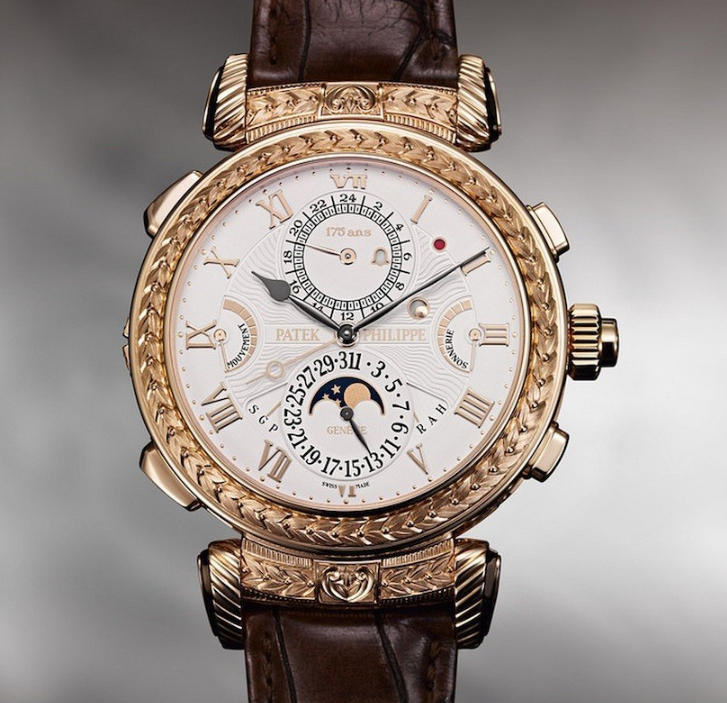
Patek Philippe created the Grandmaster Chime reference 5175 for its 175th anniversary as an extraordinary demonstration of case work, dial organisation and chiming complications. That makes it an unusually difficult subject for a replica. The challenge is not simply fitting many indications onto two dials. The case, engraving, typography and reversible construction all have to feel coherent at the same time.
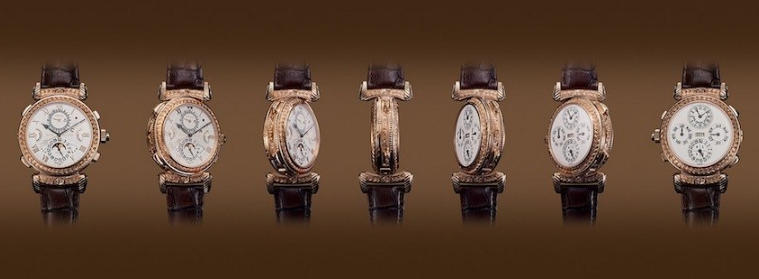
The reversible case is the defining piece of architecture
The 5175 is built around two faces, and the case can rotate so either dial can be worn outward. On a replica, that mechanism deserves more attention than claims about the total number of copied complications. The tolerances around the rotating frame, the alignment of the case within its supports and the way the lugs meet the strap all affect whether the watch looks intentional rather than simply oversized.
The engraved exterior creates another problem. Deep decorative work can easily become too soft or too busy. A close photograph should show whether the pattern remains crisp around curves and recesses instead of fading into a uniform texture.
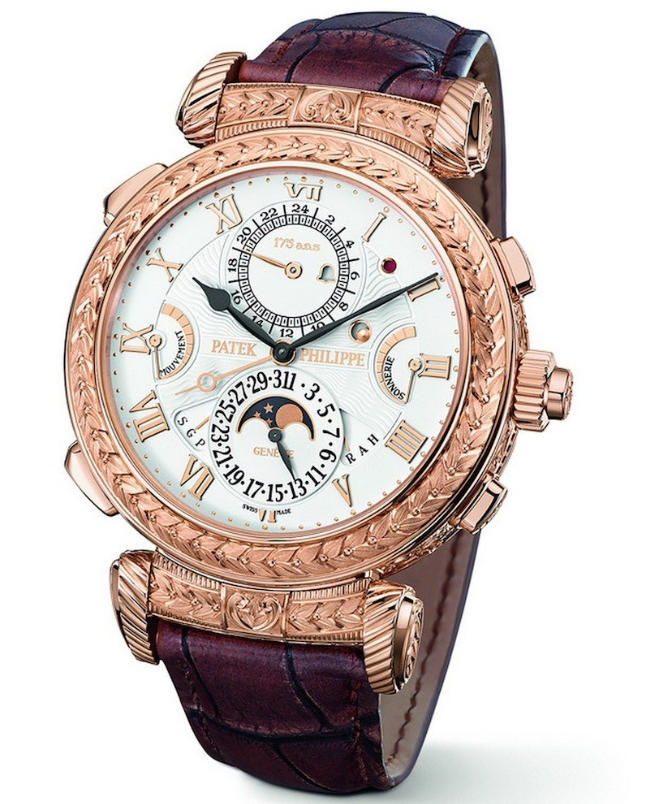
Two dials leave nowhere for poor spacing to hide
Both faces contain dense information. That means hand length, subdial position, aperture size and printed text have to share limited space without colliding. The genuine 5175 uses its layout to separate time, calendar and chiming information logically. A replica may reproduce the appearance of those indications without reproducing every underlying mechanical function, so visual similarity and functional equivalence should not be treated as the same thing.
The earlier version of this article used AAA, 1:1 and similar labels. Those terms have been removed because they do not explain which functions actually operate. Unless a complication has been independently tested, the safest description is to state what is displayed and what the supplier claims.
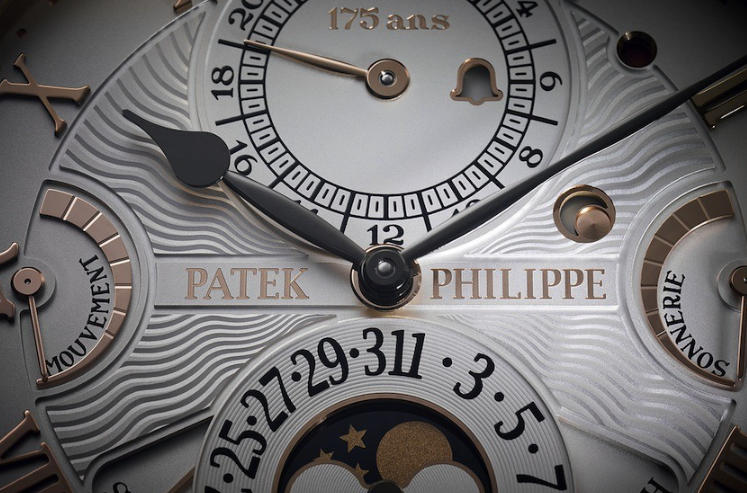
Complication watches require more cautious movement language
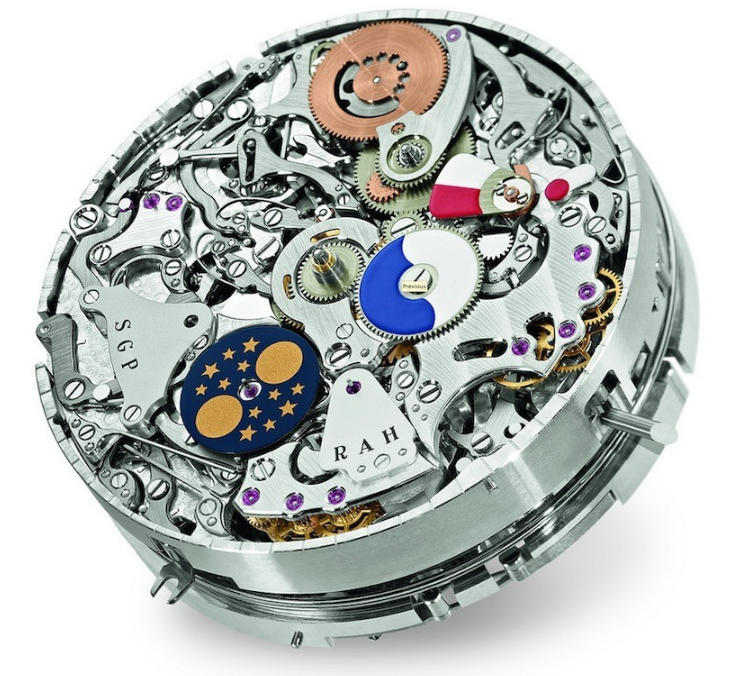
Simple three hand replicas can often be assessed from case, dial and movement layout. A Grandmaster Chime is different. Chiming mechanisms, calendars and multiple displays interact mechanically. A decorated movement or a dial that mimics the correct indications does not prove equivalent construction.
This is why readers browsing our wider Patek Philippe replica coverage should approach the 5175 as a visual and structural study first. The watch can still be interesting without making claims that cannot be verified from photographs.
Engraving quality is not just about depth
The 5175 case contains ornamental work across curved surfaces, so line continuity matters. Deep but irregular engraving can look crude, while shallower work with clean edges may read more convincingly. The pattern should also remain aligned as it passes around the rotating case structure. That continuity is a better quality signal than the simple presence of decorative engraving.
Because the watch is so large and complicated, strap attachment is equally important. The lugs and rotating frame need to support the case visually. A thin or poorly fitted strap can make the whole construction appear top heavy even if the dial work is strong.
What makes the 5175 useful to study
The Grandmaster Chime exposes the limits of replica language better than almost any other model. Words such as perfect or super clone become meaningless when a watch contains this much specialised architecture. The meaningful questions are concrete: does the case rotate cleanly, are both dials legible, is the engraving sharp, and which displayed functions actually work?
SpankWatches now presents this article around those questions. The page keeps the Grandmaster Chime as an important Patek Philippe topic while removing the unsupported quality labels that previously dominated the title and body.
