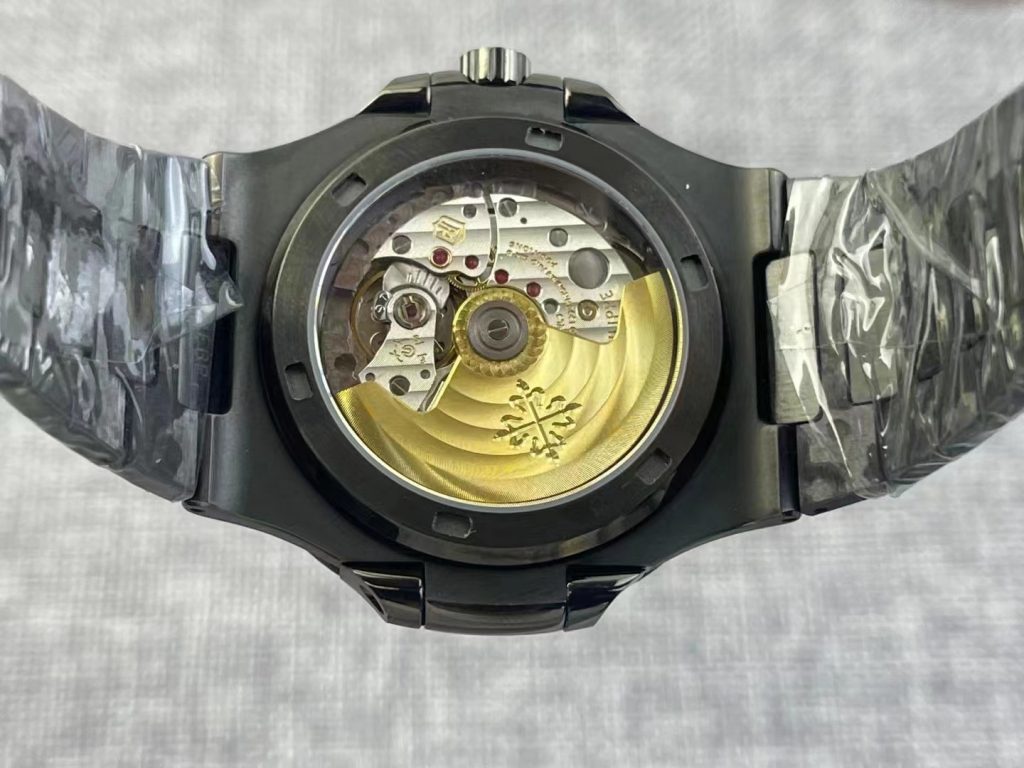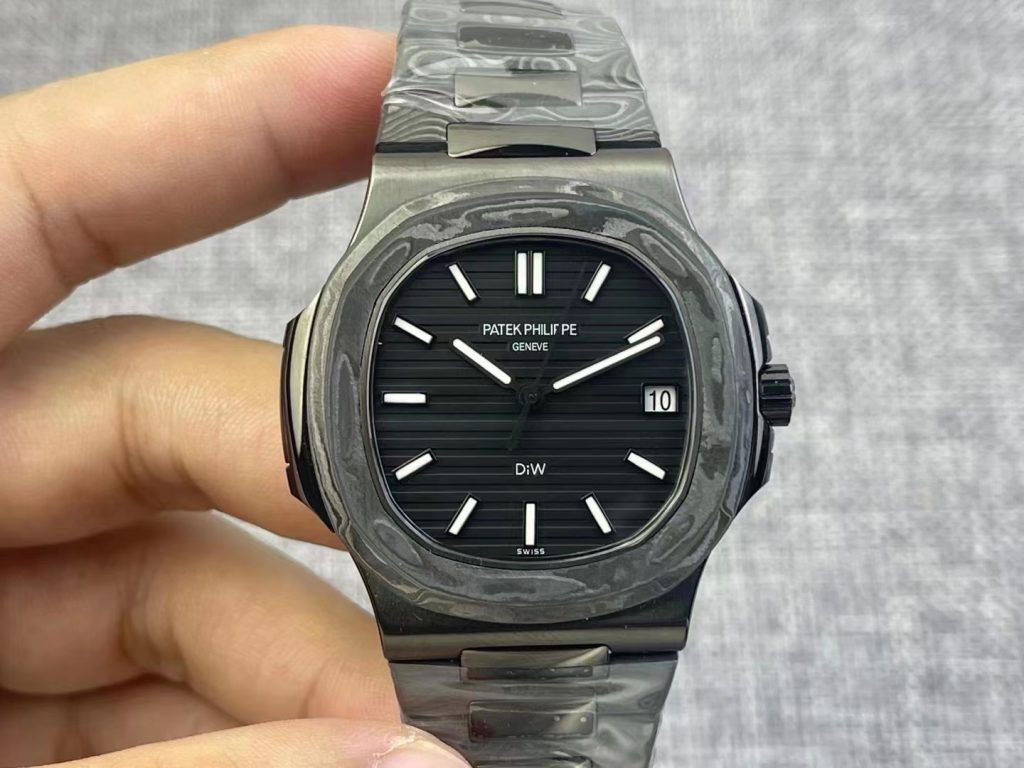
The Nautilus 5711 is normally defined by thin steel surfaces, broad horizontal brushing and a bracelet that seems to flow directly from the case. Reworking that shape in carbon changes the character of the watch before any movement detail is considered. The version shown here uses a dark carbon look around the bezel and bracelet, so the useful question is not whether it is a perfect copy of a standard 5711. It is whether the altered materials still preserve the proportions and visual rhythm that make the Nautilus recognisable.
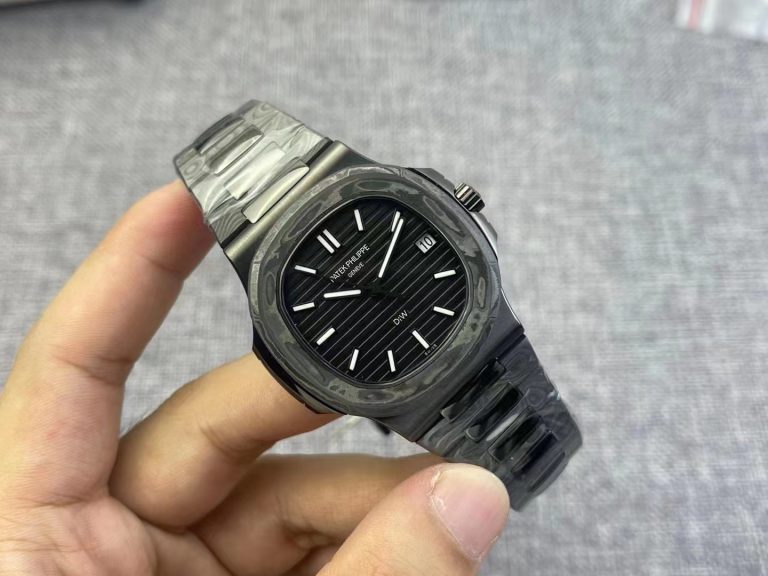
Carbon changes the way the Nautilus case reads
On a conventional Nautilus, the contrast between polished edges and brushed flat surfaces is one of the main sources of definition. A carbon texture behaves differently. It breaks up reflections and makes the bezel look busier, while the darker colour visually reduces the apparent size of the case. That can be attractive, but it also makes case shape and bezel thickness easier to judge because the eye is no longer distracted by bright steel.
The example pictured appears to combine a carbon styled bezel with a dark metal case rather than using carbon for every structural part. That mixed construction is important to state clearly. It gives the watch a custom interpretation rather than a literal reproduction of the standard 5711. Claims about exact materials or manufacturing methods should therefore be treated as supplier descriptions unless they are independently verified.
The bracelet is the strongest visual departure
The bracelet mixes dark textured links with polished metal accents. This creates more contrast than the original 5711 bracelet and gives the watch a noticeably more contemporary, modified appearance. It also means link shape, spacing and articulation matter more than any claim about the material itself. Uneven gaps or overly rounded edges can disrupt the Nautilus silhouette quickly because the bracelet is such a large part of the design.
For readers comparing different Patek Philippe replica watches, this is a useful example of why a visually dramatic version should be judged on proportion first. A distinctive material can hide small finishing differences in photographs, but it cannot correct an awkward case profile or a bracelet that does not taper naturally.
Movement presentation needs a separate judgement
The original article described the movement as a 324 style clone. That description is retained only as a market label, not as independent confirmation that the construction duplicates a genuine Patek Philippe calibre. What can be judged more reliably from the watch itself is the movement layout, rotor appearance, engraving quality and the relationship between movement thickness and overall case profile.
This distinction matters because movement naming in the replica market is inconsistent. Two movements carrying the same advertised name can use different bases or decoration. For a thin sports watch such as the 5711, the practical issue is whether the movement allows a believable case thickness and stable hand and date operation rather than whether a sales description uses the word clone.
Photography can make carbon look more convincing than it is
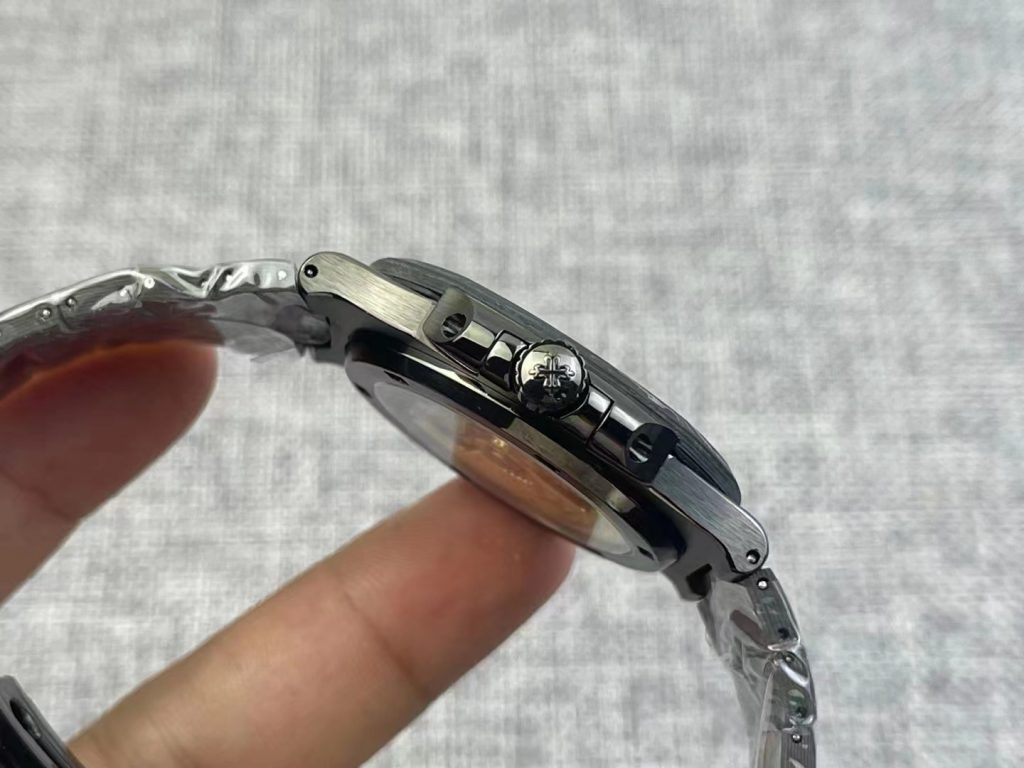
Carbon patterns vary naturally, so a single photograph can create the impression of complex material even when the finish is mostly superficial. Look for consistency around the bezel edge, screw recesses and bracelet link shoulders. Abrupt pattern changes or identical repeated textures can reveal how the surface was produced. The polished metal sections are also useful because they show whether the dark treatment has been applied cleanly without softening edges.
Another point is wear. Dark coatings tend to reveal scratches differently from bare steel. On a mixed material watch, the long term appearance may depend less on the carbon effect itself and more on how well the coated metal resists edge wear. That is a practical ownership consideration the earlier article did not address.
A custom Nautilus rather than a substitute for the steel original
The carbon treatment works best when viewed as a custom interpretation of the Nautilus. It keeps the recognisable rounded octagonal bezel and integrated bracelet architecture, but changes the surface language enough that direct one to one comparisons with a standard steel 5711 become less useful.
SpankWatches treats versions like this as design studies rather than proof of factory superiority. The useful comparison points are case proportion, bezel shape, dial spacing, bracelet construction and movement presentation. Those details remain visible even when the material treatment is intentionally different from the watch that inspired it.