
The Royal Oak Diver 15720 is a difficult watch to reproduce because its design depends on sharp case geometry and a layered dial rather than on decorative complexity. The octagonal bezel, exposed screws, broad brushed surfaces and internal rotating dive scale all need to align. A strong movement label cannot rescue the watch if those visible relationships are wrong.
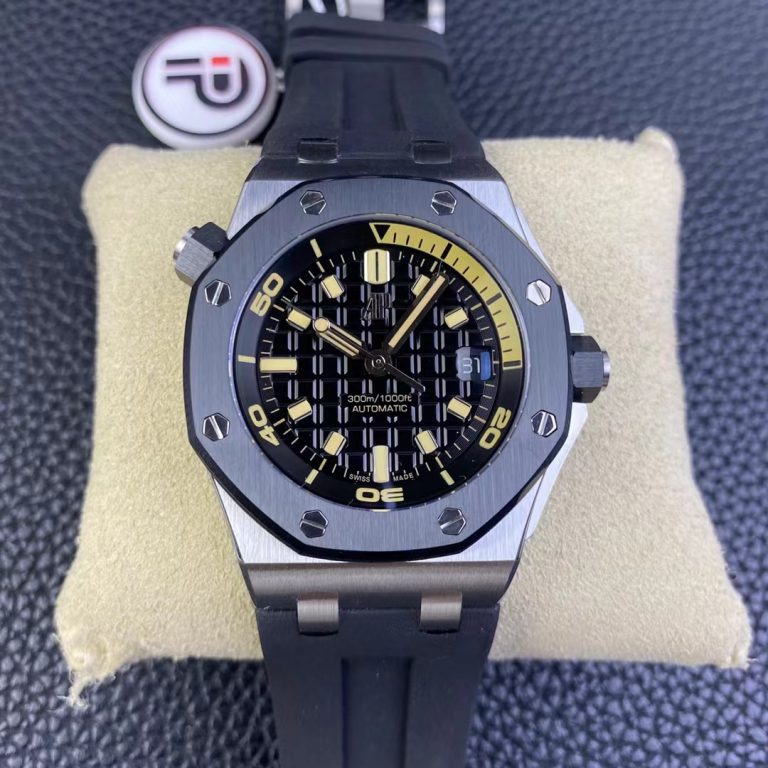
Case geometry is the first test
The Royal Oak case has long straight lines that expose soft finishing immediately. Brushing should follow the direction of each surface, polished bevels should remain narrow and the bezel should sit cleanly over the case. On the Diver, the ceramic bezel adds another texture, so the edge between ceramic and steel becomes a useful point of comparison.
The previous article ranked factories and described one version as superior without independent evidence. That ranking has been removed. The images still allow a useful discussion of bezel shape, lug transition, case thickness and the way the strap meets the case.
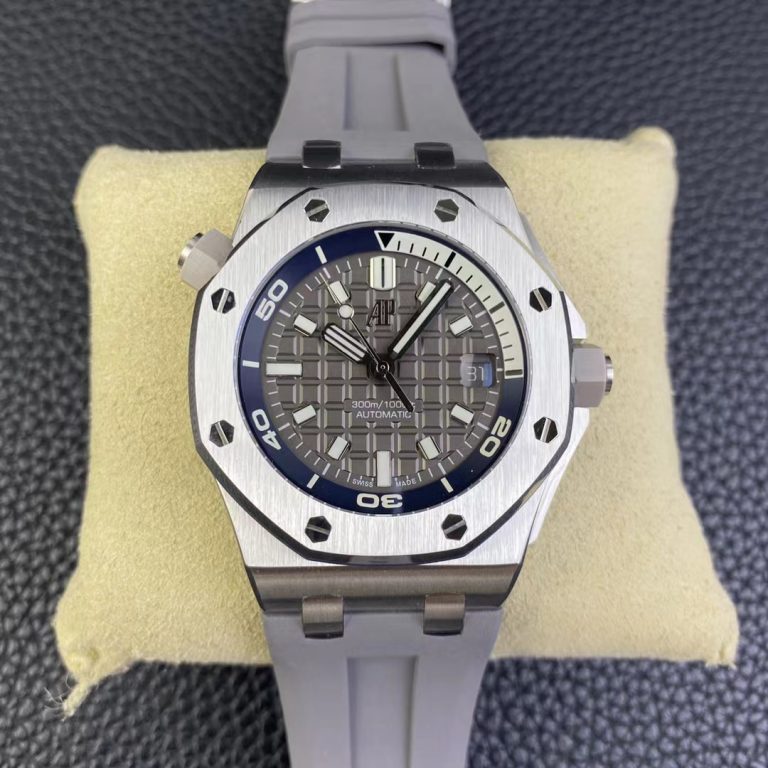
The dial and internal bezel need to work together
The 15720 uses large markers and a strong minute scale because readability is central to the design. The internal rotating bezel introduces another ring of information. Alignment between that ring, the hour markers and the central hands is therefore more important than decorative text.
Colour versions can change the impression dramatically, but the same geometry applies to black, blue, green or grey executions. Check marker width, the spacing around the date window and the amount of open dial between the central pinion and the internal bezel.
The 4308 label needs context
The replica shown was marketed with a movement described as 4308 style. That should be read as a product description, not proof that the movement duplicates Audemars Piguet calibre 4308. Visible rotor decoration and bridge engraving can be compared, but architecture, materials and performance require independent inspection.
Readers looking through our broader Audemars Piguet replica articles will find the same principle useful for Royal Oak chronographs and Code 11.59 models: movement names matter less than the evidence available for the individual watch.
Strap integration is part of the Royal Oak geometry
The Diver uses a rubber strap rather than the integrated metal bracelet associated with many Royal Oaks, but the strap still has to follow the case. The first section should sit close to the lugs and continue the angular design instead of leaving a large visual gap. Buckle size and taper also affect whether the watch feels balanced.
Because the case is already thick and angular, a bulky strap can push the design too far. This is a practical detail that matters on the wrist and is more durable information than temporary factory rankings.
A Diver should remain a practical looking watch
The 15720 works because its technical details are integrated into a clean case. Overly glossy finishing, a thick bezel or poor strap fit can make the replica look ornamental rather than functional. That is why case work and alignment are the most useful observations here.
SpankWatches has revised the page to remove outdated factory predictions and unsupported reliability statements. The URL remains unchanged because it already earned impressions and clicks in the supplied Search Console data.
