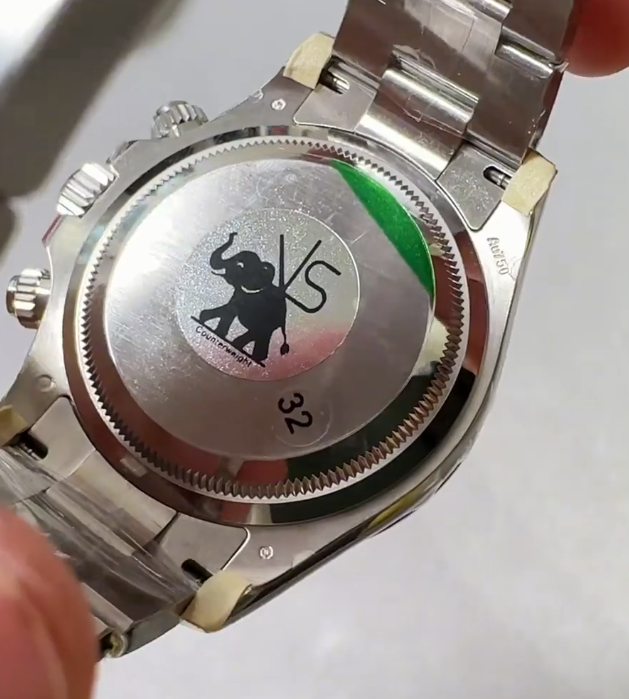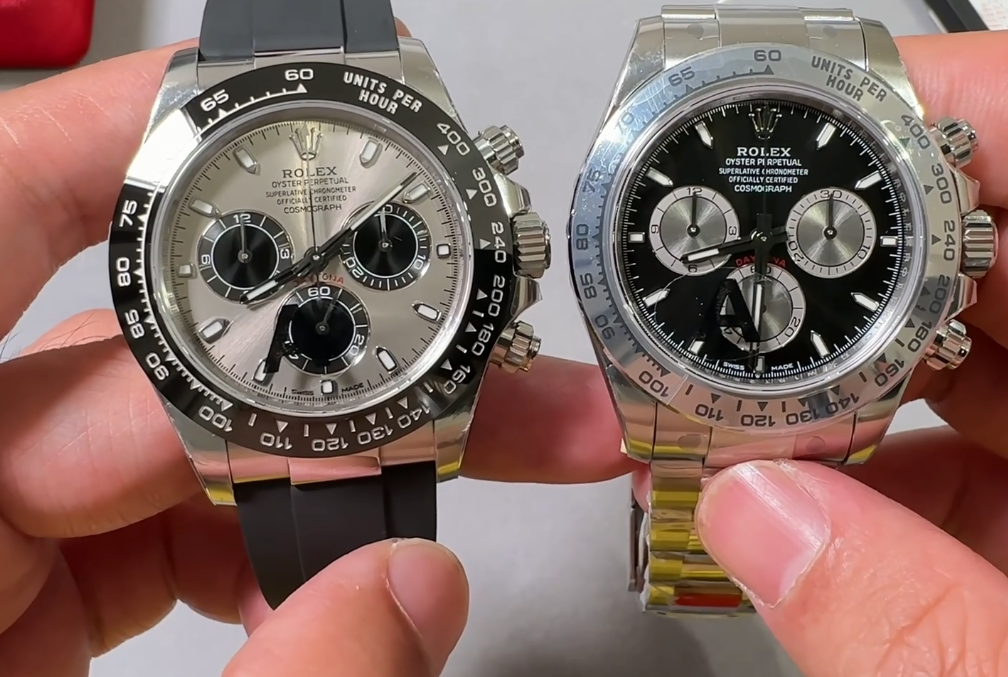
Weight is one of the easiest details to notice when handling a metal chronograph, but it is also one of the easiest details to overstate in replica marketing. The weighted VS Factory Daytona 126500LN is interesting because added mass changes how the bracelet hangs and how solid the watch feels, yet weight by itself does not tell us whether the case, dial and chronograph layout are convincing.
Added weight only matters when the balance is right
The version shown in the original article was promoted as using additional dense material inside the case and bracelet. Rather than treating an advertised gram figure as proof of accuracy, it is more useful to consider where that mass sits. A heavy clasp with a relatively light watch head can feel unbalanced. A heavier bracelet that distributes mass across the wrist usually feels more coherent.
The Daytona case is compact for a modern sports chronograph, so the transition from case to Oyster style bracelet is important. The lugs should not look swollen simply because extra material has been added. Side profile, crown guard shape and the relationship between the bezel and mid case remain more meaningful visual checks than weight alone.
Dial spacing exposes small errors quickly
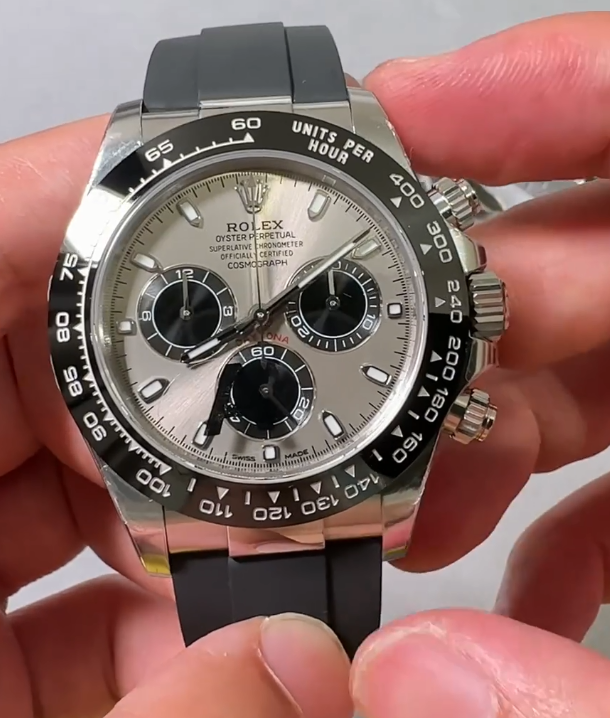
A Daytona dial contains a lot of information in a confined area. Subdial size, the distance between the three registers, marker placement and the thickness of printed text all affect the overall impression. On panda and black dial versions, contrast makes those proportions especially easy to see. A heavy watch with crowded subdials will still look wrong.
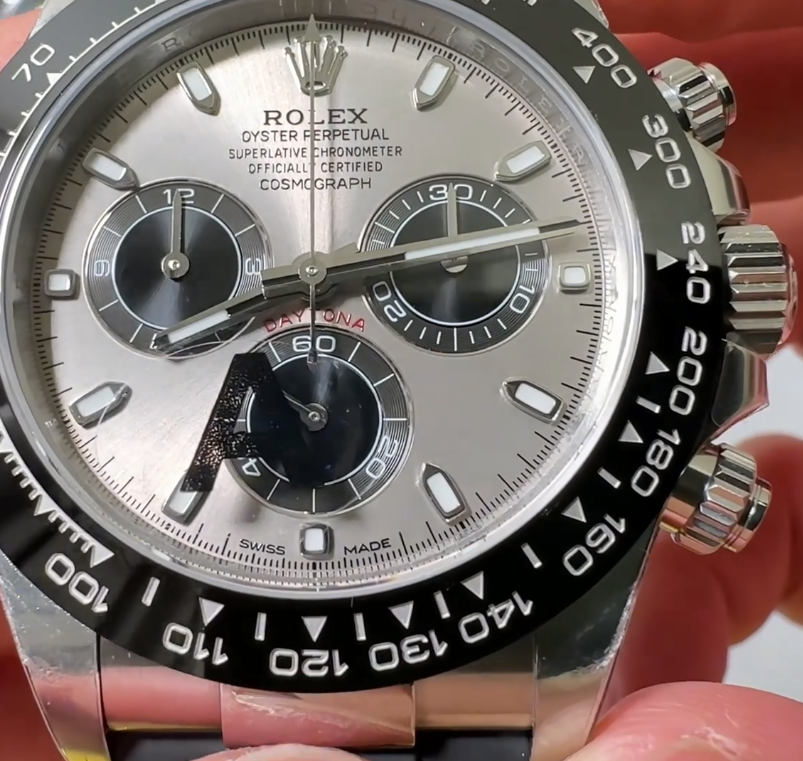
The same applies to the ceramic bezel. Engraving depth, numeral shape and the width of the bezel change how large the dial appears. Readers looking through our broader Rolex replica watch coverage will notice that the most useful comparisons usually come from proportions rather than from claims such as genuine grade or exact factory tolerances.
Movement names should not be treated as independent verification
The source article used the term 4130 clone for the movement. In the replica market that name is often used as shorthand for a chronograph movement designed around the architecture or visual cues of Rolex calibre 4130. It should not be read as confirmation that every component, material or performance characteristic is identical to Rolex production.
Practical checks are more useful: whether the chronograph starts and resets cleanly, whether the pushers feel consistent, whether the running seconds and chronograph registers behave as expected, and whether the movement allows the case to maintain the intended profile. These are observable qualities. Claims about power reserve, repair rate or component interchangeability require separate verification and have therefore been removed from this article.
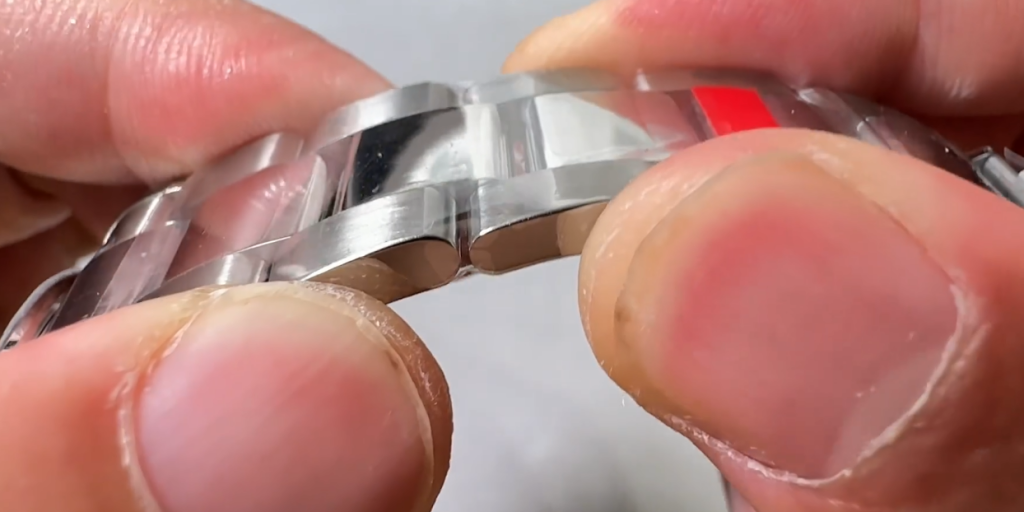
Bracelet construction deserves its own comparison
Added weight often sits inside bracelet links, which can change articulation and clasp balance. The first links should move freely without obvious gaps, while the clasp should close positively and sit centred under the wrist. If dense inserts make the links stiff, the watch can feel heavy without feeling refined. That distinction is easy to miss when a review concentrates on a headline gram figure.
It is also worth comparing the watch at different bracelet lengths. Removing links changes the distribution of any added mass, so two owners can experience the same watch differently. This is one reason a weighted replica should be judged as a complete case and bracelet system rather than by a single specification.
What the weighted Daytona idea actually adds
The extra mass can improve wrist presence, particularly for readers who find lighter replicas immediately unconvincing. It does not replace the need to inspect case shape, dial printing, bracelet articulation and chronograph operation. That is why this page now treats the weighted construction as one design variable rather than as a reason to label the watch the best option.
SpankWatches will continue to separate visible design observations from factory claims. For this Daytona, the worthwhile question is simple: does the added weight support an already coherent watch, or is it being used to distract from details that matter more?